How we grade
SignalSnitch independently grades the public trades that finfluencers make — across X (Twitter), Reddit, StockTwits, and YouTube, for both stocks and crypto — by settling each trade against real historical price data. The result is a transparent, backward-looking accuracy record. This page explains exactly how that works. It is educational, not investment advice.
What SignalSnitch does
Every day, thousands of self-styled traders and analysts post public market trades — buy this, short that, this coin is going to the moon. Almost none of them keep score. SignalSnitch keeps score for them. We read the public posts these accounts make, identify the concrete directional trades inside them, and then grade each trade against what the market actually did afterward.
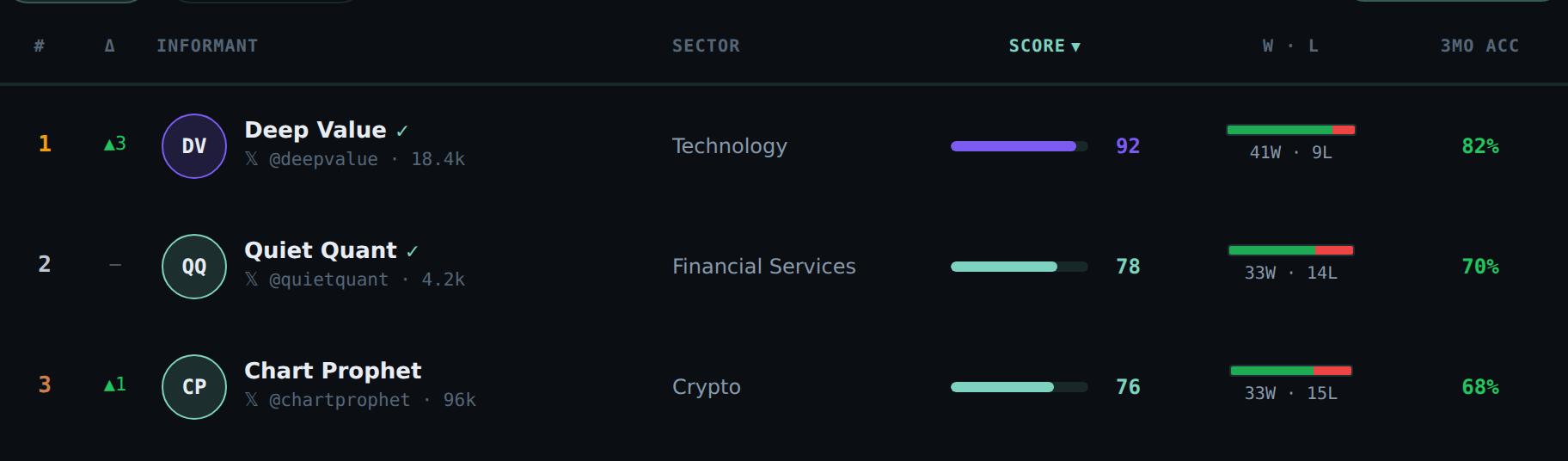
Those trade outcomes roll up into an accuracy percentage for each account, and those accuracy records feed an accuracy-and-returns leaderboard that ranks who has actually been right. We cover both equities and cryptocurrencies. The whole product exists to answer one plain question: is this person actually accurate, or do they just sound confident?
How a trade is detected
Our pipeline ingests public posts from the platforms we cover — nothing private, nothing behind a paywall, and nothing a logged-out visitor couldn't read themselves. A classifier then reads each post and decides whether it contains an actual, actionable directional trade rather than commentary, a question, or a joke.
When the classifier finds a trade, it records the structured facts that make the trade gradeable: the ticker or asset named, the direction (bullish or bearish), and the timestamp of the post. That timestamp is the anchor — it pins the trade to a specific moment in market history, so there is no hindsight and no cherry-picking the entry. Vague or non-directional posts are not graded at all.
How a trade is resolved
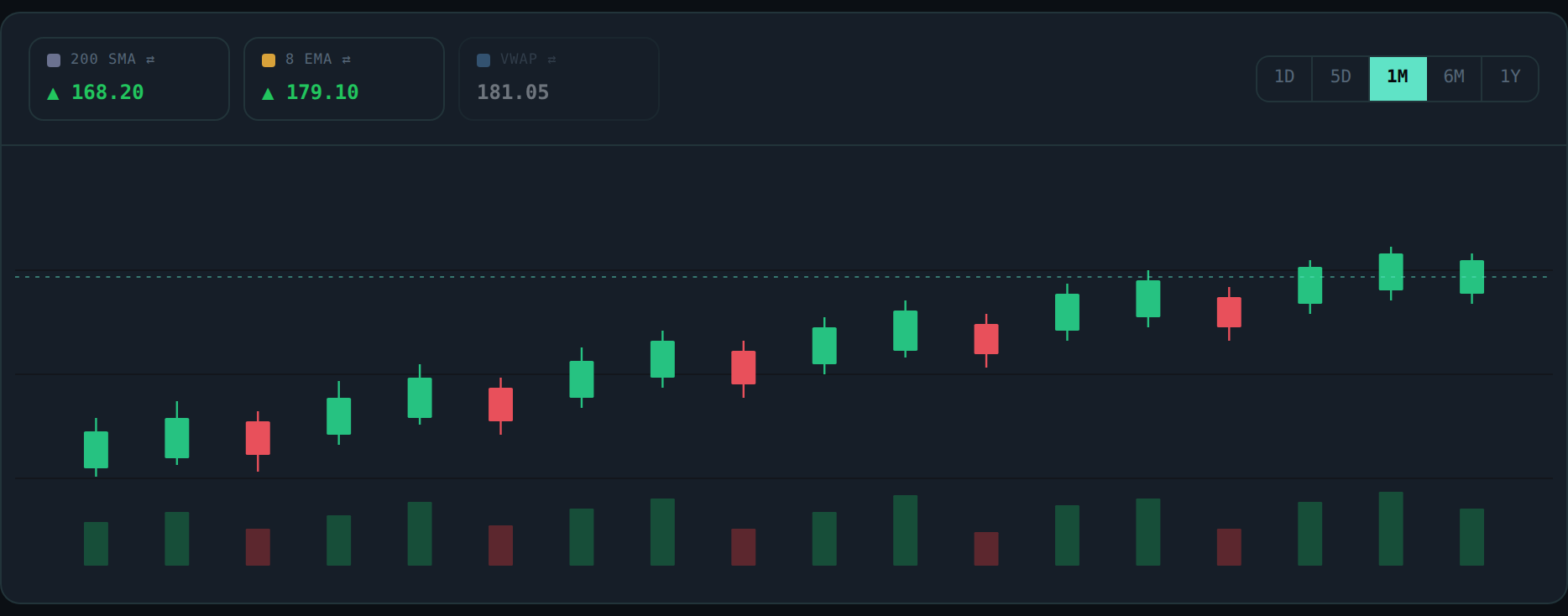
Once a trade is recorded, we settle it against the real price path over a fixed forward window. Using historical price snapshots for the named asset, we look at how the price moved from the moment the trade was posted, and the trade resolves to one of two outcomes:
- WIN — the predicted direction played out over the window (a bullish trade on an asset that rose; a bearish trade on one that fell).
- LOSS — the price moved against the trade.
An account's accuracy % is simply wins ÷ (wins + losses) across its resolved trades — the same arithmetic anyone would do by hand, just done consistently against the tape. The leaderboard goes one step further: it ranks accounts using a z-scored model that blends accuracy and realized returns over a trailing window, so that being reliably right on trades that actually moved counts for more than a lucky one-off. Trades whose window has not yet closed stay pending and do not count until they resolve.
What we grade — and what we don't
We grade the trade: a public, dated, verifiable prediction, measured against what the market actually did. We do not grade the person — not their character, their intelligence, their honesty, or their credentials. A SignalSnitch grade is a factual record of how an account's posted trades scored against real price data. It is not an accusation, an insult, or a claim about anyone's motives.
When we say an account is, say, 41% accurate over 120 resolved calls, that is an objective, reproducible statement about those specific posts — not a verdict on the human behind the account. Anyone can take the same public posts, the same timestamps, and the same historical prices and arrive at the same numbers. That reproducibility is the whole point.
Transparency & corrections
Every trade outcome inside SignalSnitch links back to the source post it came from and the real price data it was settled against, so the grade can always be traced to its receipts. Nothing is graded in a black box you can't inspect.
No automated system is perfect. If an account holder — or anyone — believes a particular grade is wrong, miscategorized, or based on a misread post, they can dispute it, and we review and correct genuine errors. Grading rules evolve, and we apply improvements consistently rather than retroactively to make anyone look better or worse.
One unavoidable caveat applies to everyone we track: past accuracy is not a prediction of future results. A strong track record is a record of what has already happened, not a guarantee of what comes next.
Educational — not investment advice
SignalSnitch is an educational accountability tool. Nothing on this site is investment advice, a recommendation to buy or sell any security or cryptocurrency, or a solicitation of any kind. We do not manage money, take positions on your behalf, or tell you what to trade.
We measure how public market trades have scored against real price data so that the public can evaluate the people making those trades. What you do with that information is entirely your own decision, and you should consult a licensed professional before making any investment. Markets involve risk, including the loss of principal.